

TUTOR TRAINING
The art and science of academic mentorship
Educating those who guide the creation of knowledge
The Academy regards the preparation of academic tutors as a distinct field of scholarly and methodological development. A tutor working with experienced professionals and research-oriented participants needs more than disciplinary knowledge: scientific judgement, methodological competence, ethical responsibility and an ability to encourage independent thought.
The purpose of academic mentorship is not to provide answers, but to develop the intellectual capability to discover, examine and defend them.
Beyond teaching — towards intellectual partnership
Advanced academic mentorship creates a productive relationship between established theory, professional experience and the uncertainties of scientific investigation. The tutor helps researchers recognise the research potential within practical problems without replacing their judgement or taking ownership of their work.
Four dimensions of tutor competence
Methodological mastery
Tutors assess the clarity of a research question, validity of design, suitability of quantitative, qualitative or comparative approaches and limitations of the available evidence. Their role is to explain defensible options rather than impose a predetermined conclusion.
Analytical judgement
Tutors recognise unsupported causal claims, bias, methodological weakness, inconsistent reasoning and unwarranted generalisation. Constructive feedback helps researchers understand not simply that an argument is incomplete, but how to improve it.
International and comparative competence
Academic mentors must appreciate the different institutional and cultural circumstances in which professional practices develop. Cross-border cases require careful comparison of applicable law, economic conditions and jurisdiction-specific responsibilities.
Knowledge currency and regulatory literacy
A responsible tutor recognises when knowledge is incomplete or outdated and develops disciplined habits of source verification. National legislative changes and international agreements must be considered according to their actual status and applicability.
Research mentoring and academic independence
Effective guidance supports the choice of a meaningful problem, construction of an appropriate research plan, critical engagement with literature, interpretation of findings and careful presentation of conclusions. Originality, research decisions and authorship remain the responsibility of the researcher. Formal supervision and examination, where applicable, remain subject to the rules of the responsible institution.
Academic dialogue, ethics and artificial intelligence
Good mentorship relies on questions that challenge assumptions without undermining intellectual confidence. It requires respectful disagreement, confidentiality, academic integrity and clarity about conflicts of interest. Artificial intelligence may assist discovery and analysis, but generated references, interpretations and statistical claims must be verified; technological assistance cannot replace scholarly responsibility.
Teaching exceptionally able school pupils
Research-informed tutor preparation also extends to educators supporting academically advanced school pupils. Their needs are not met by accelerating content alone: sophisticated learners benefit from disciplinary depth, open-ended questions, careful guidance in the evaluation of evidence and opportunities to defend original arguments.
Methodological development for these educators includes age-appropriate research tasks, demanding but supportive feedback, ethical use of digital tools, critical reasoning and inclusive approaches that recognise varied intellectual, emotional and developmental needs. Intellectual challenge should never displace safeguarding, wellbeing or appropriate educational responsibilities.
The Academy’s role in this area is the research and development of teaching methods and tutor-training frameworks; this description makes no claim to operate, accredit or award qualifications through a school.
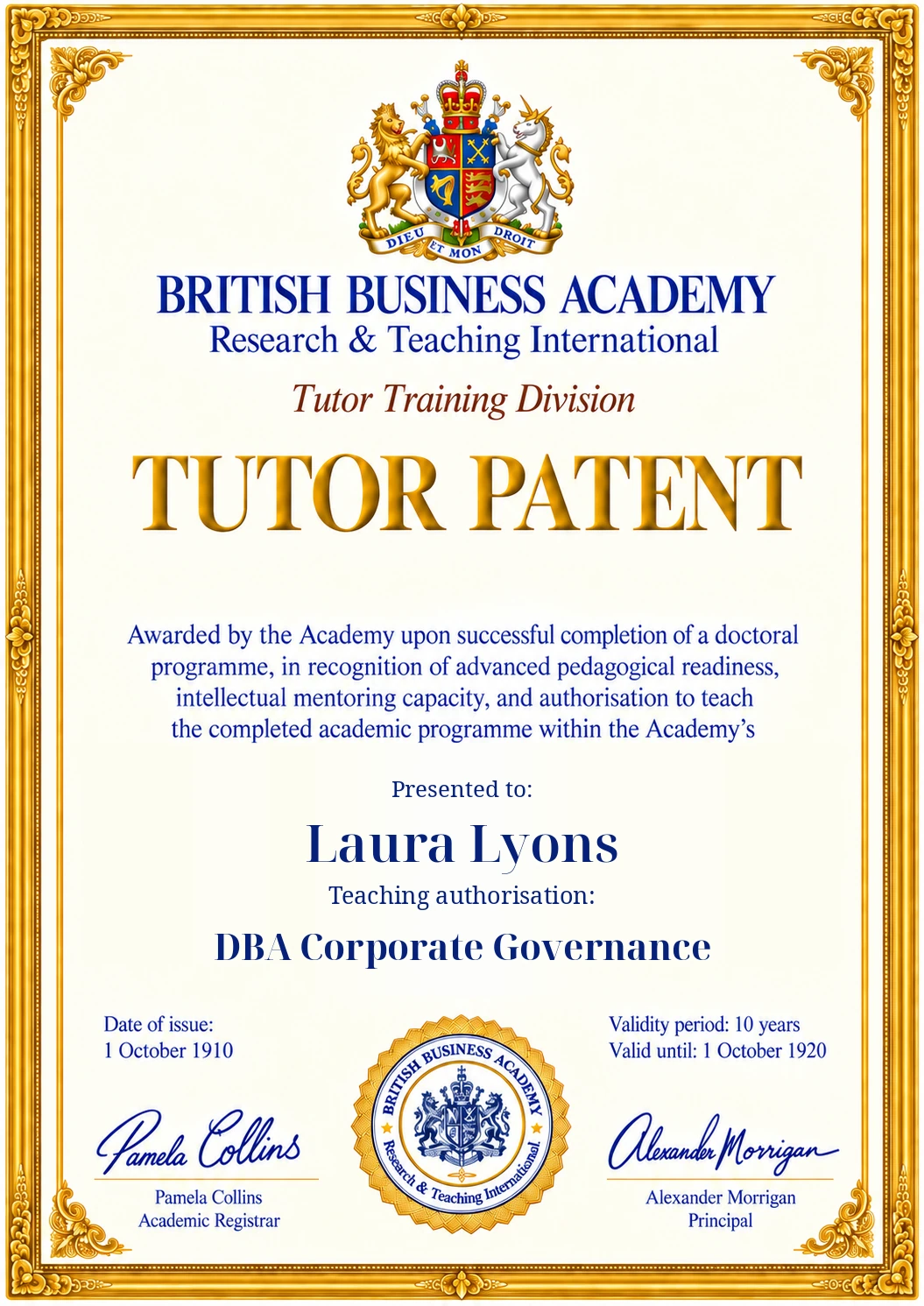
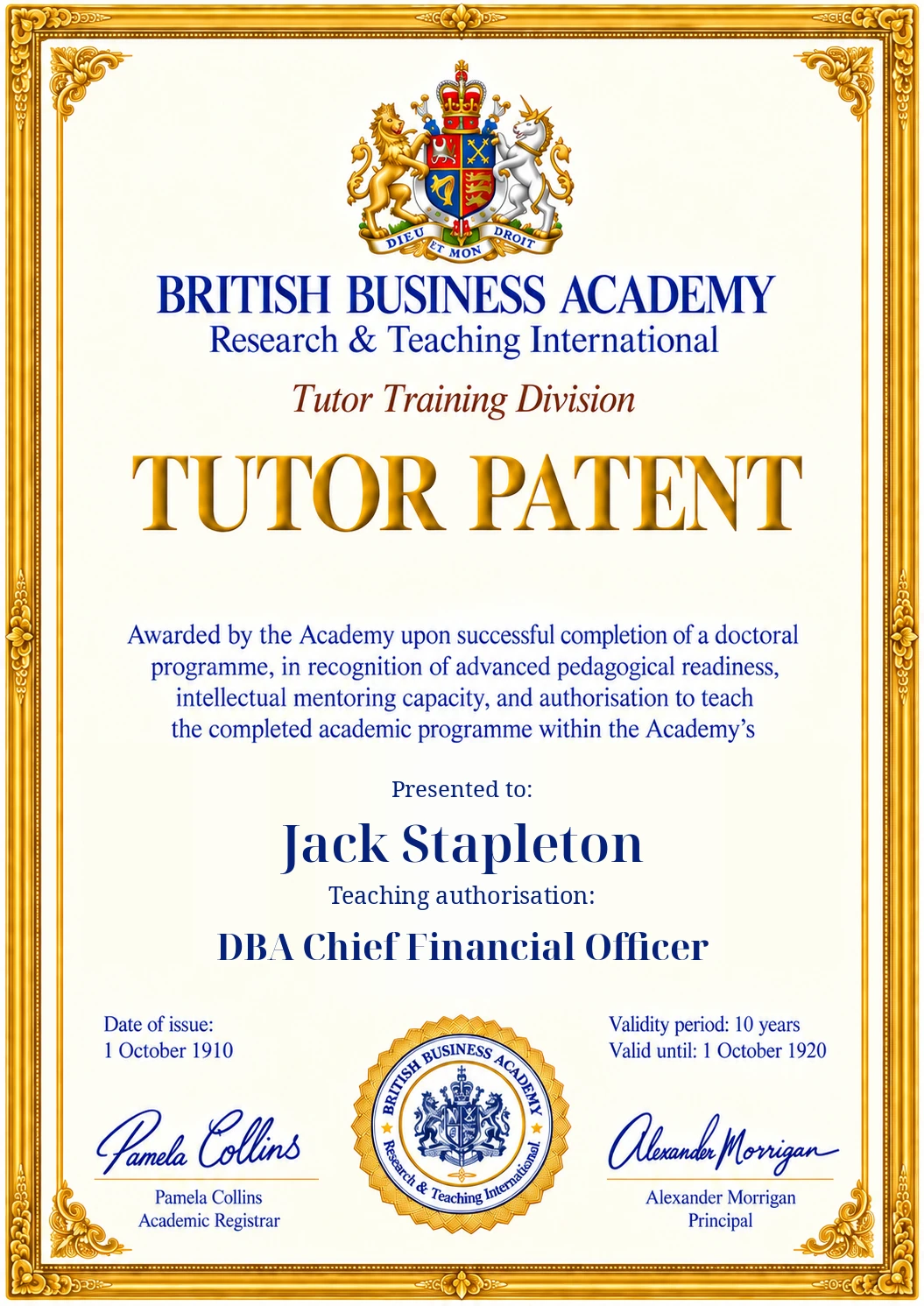
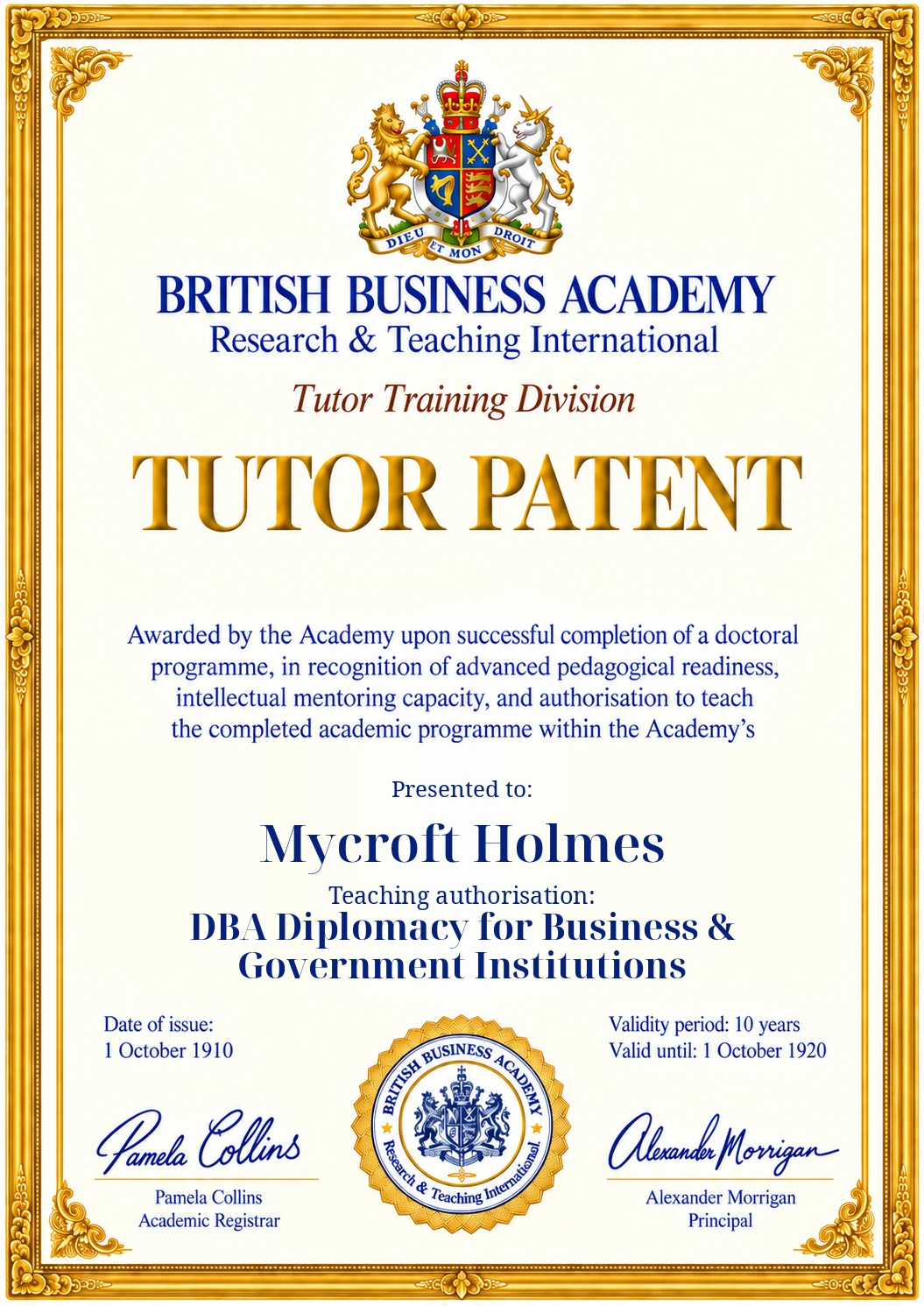
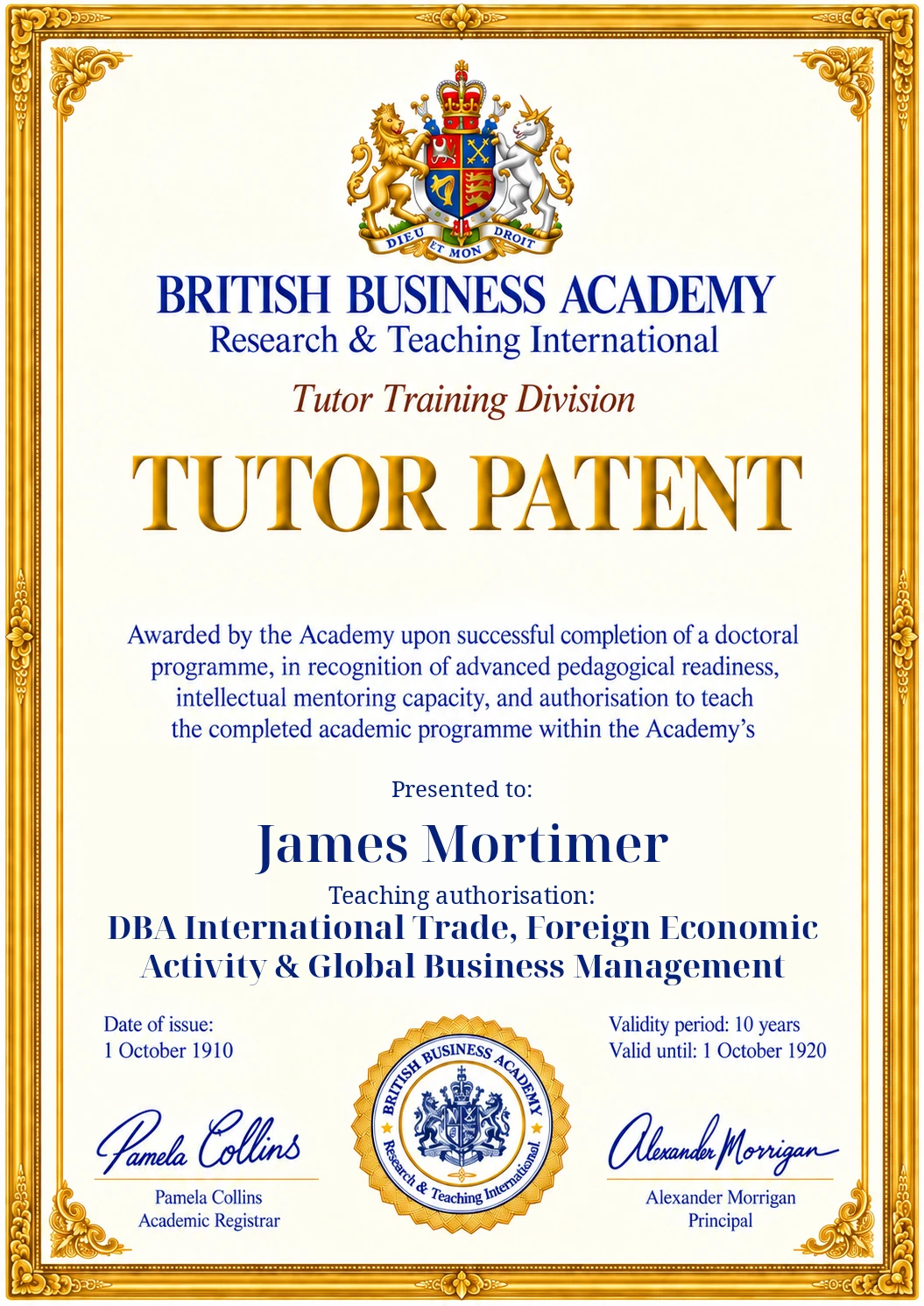
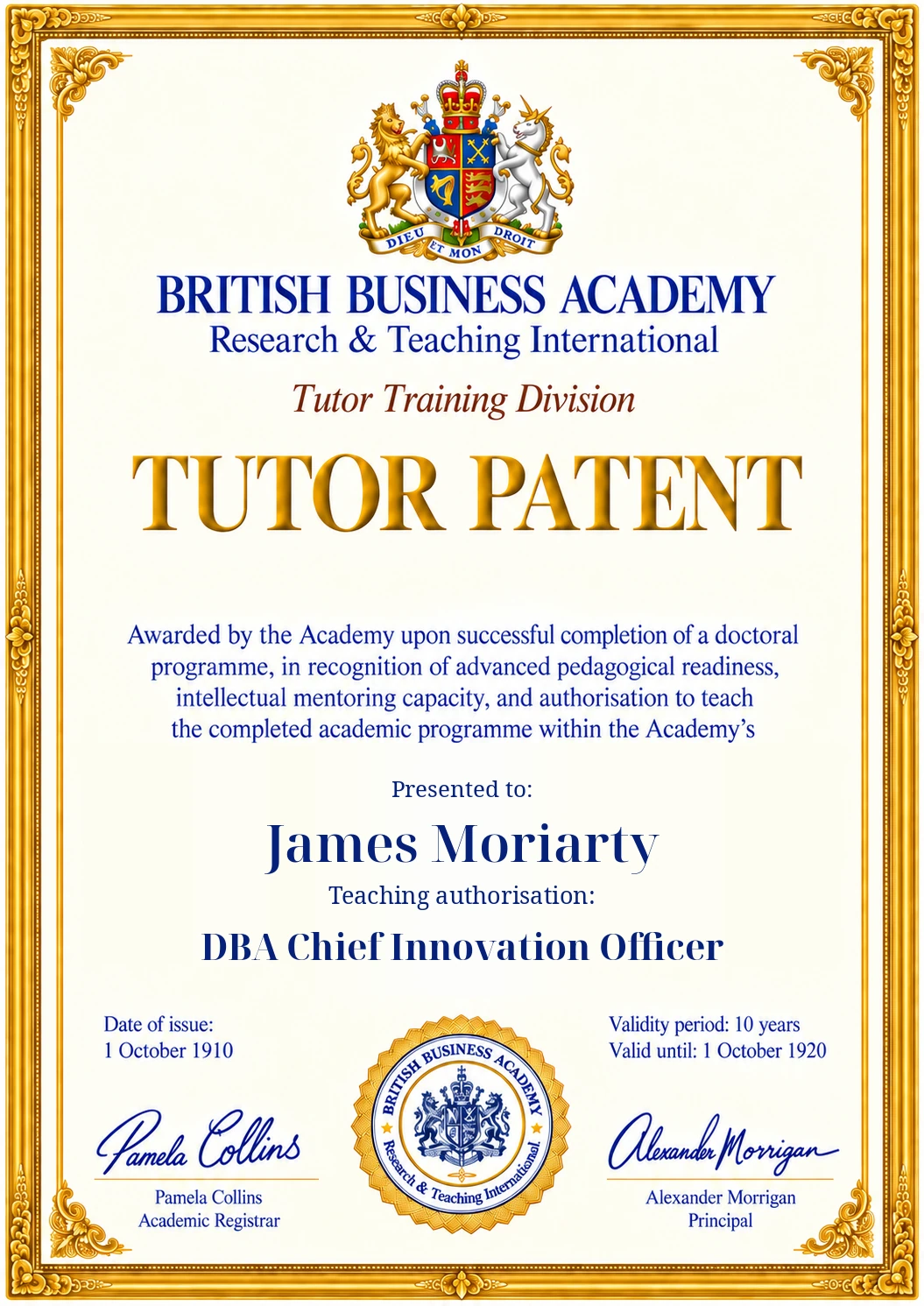
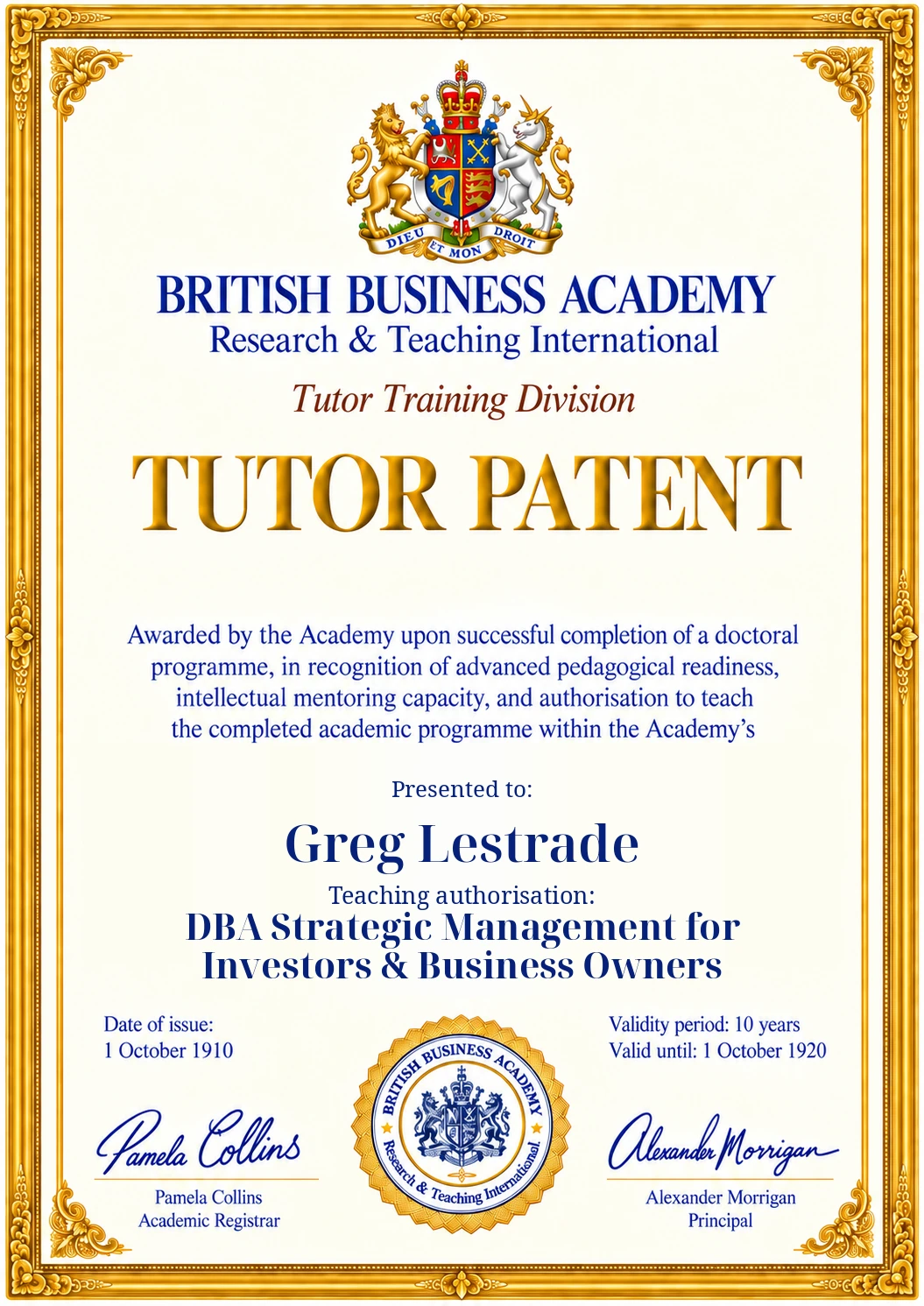
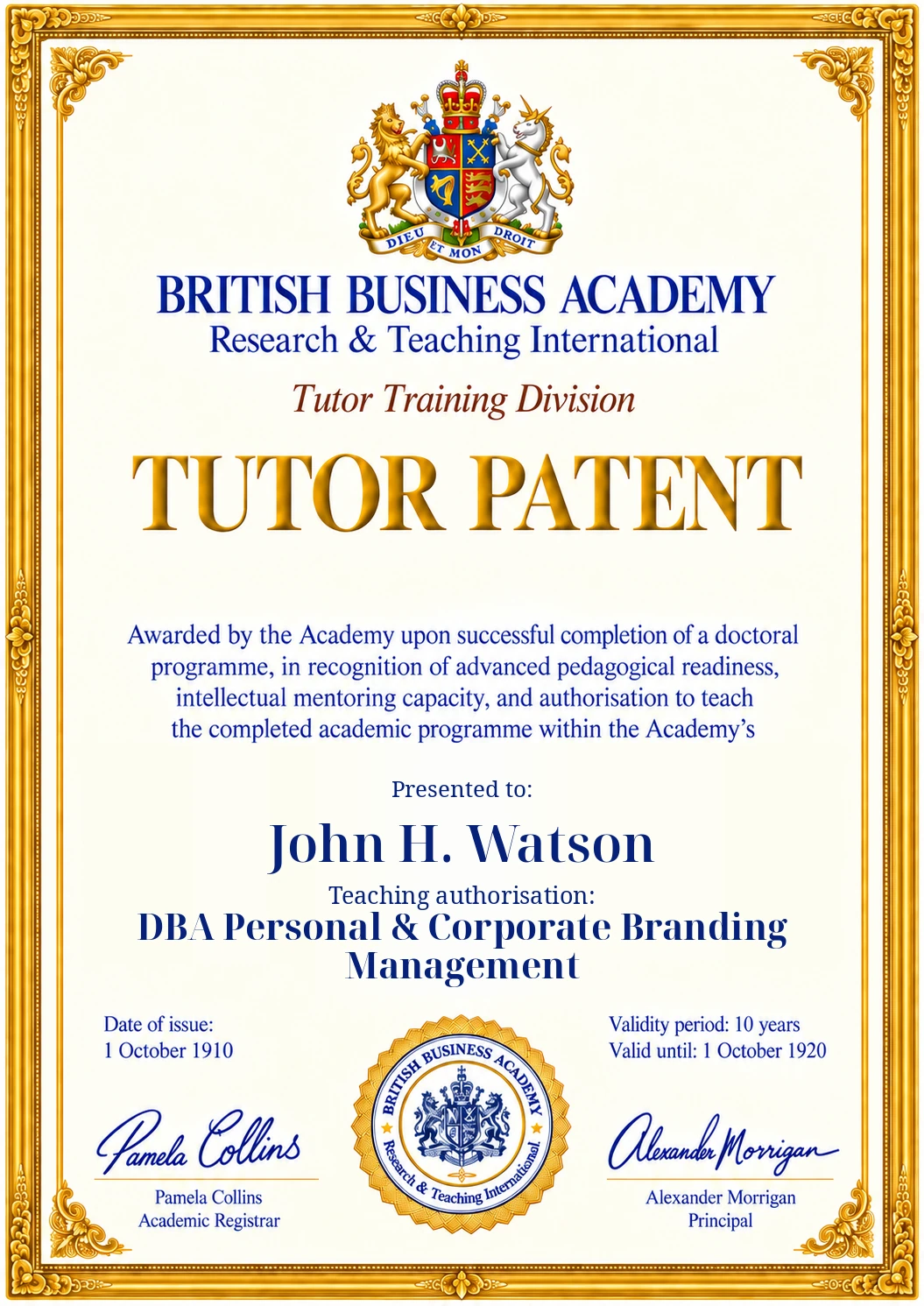
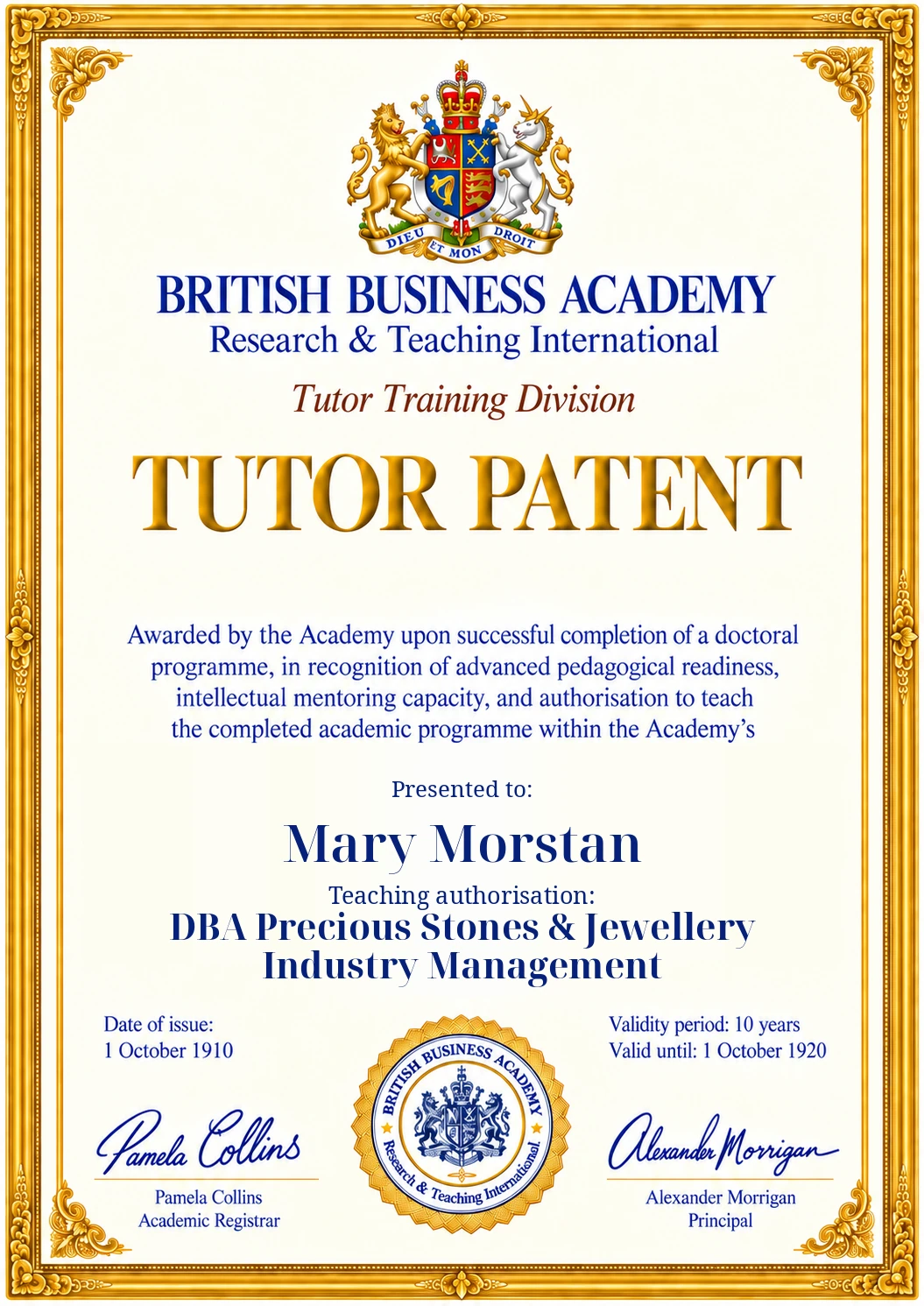
Tutor Patents: authorisation to teach the completed programme
The Academy’s Tutor Patent is conceived as a subject-specific teaching authorisation within its own academic and tutor-development framework. It recognises doctoral graduates who have successfully completed their programme and demonstrated excellent pedagogical preparation, subject expertise and readiness to mentor researchers.
A Tutor Patent identifies the doctoral programme which its holder may teach. Its proposed validity is ten years, subject to the Academy’s academic assessment and internal authorisation procedures; it is not represented as an external statutory teaching licence.
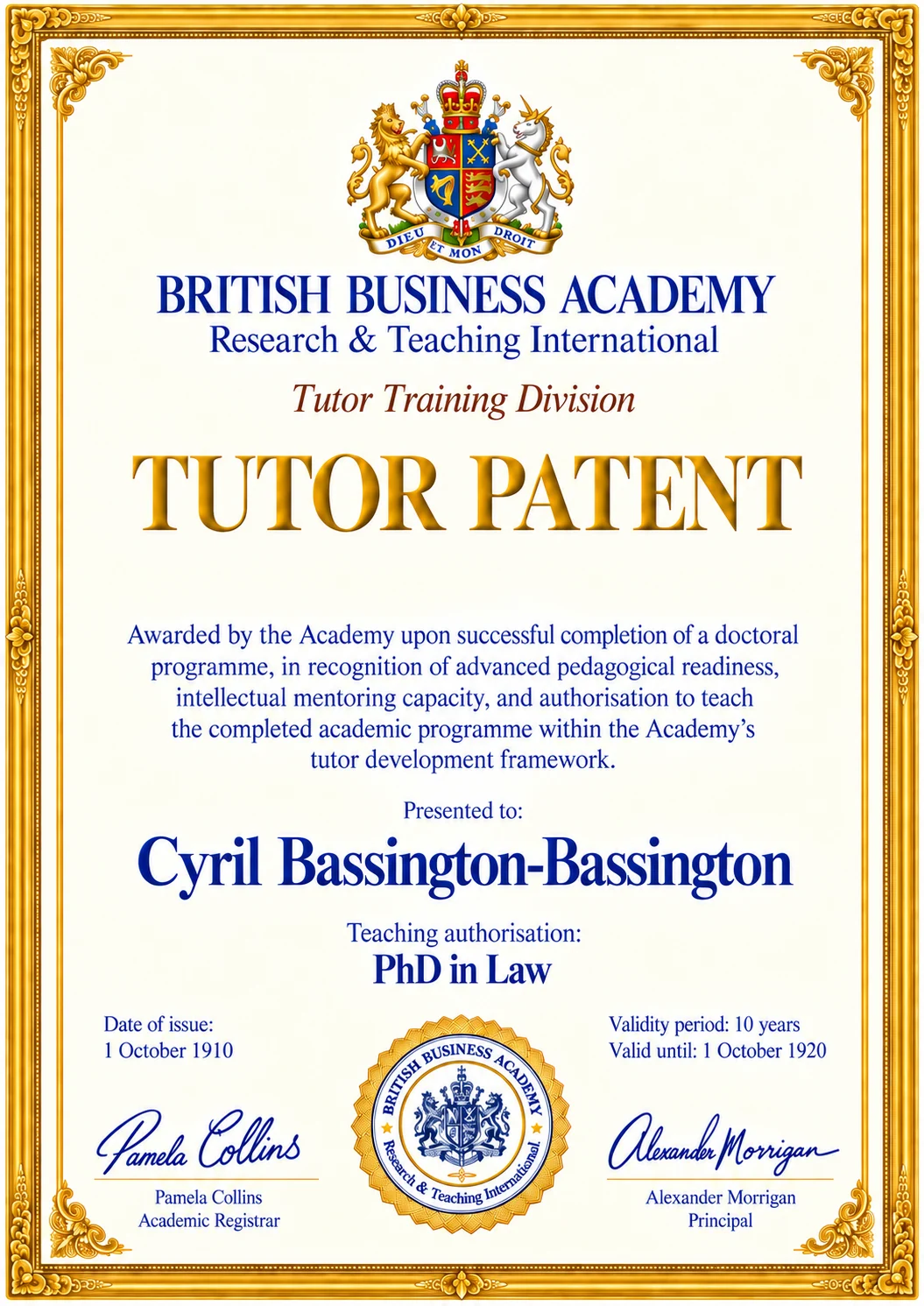
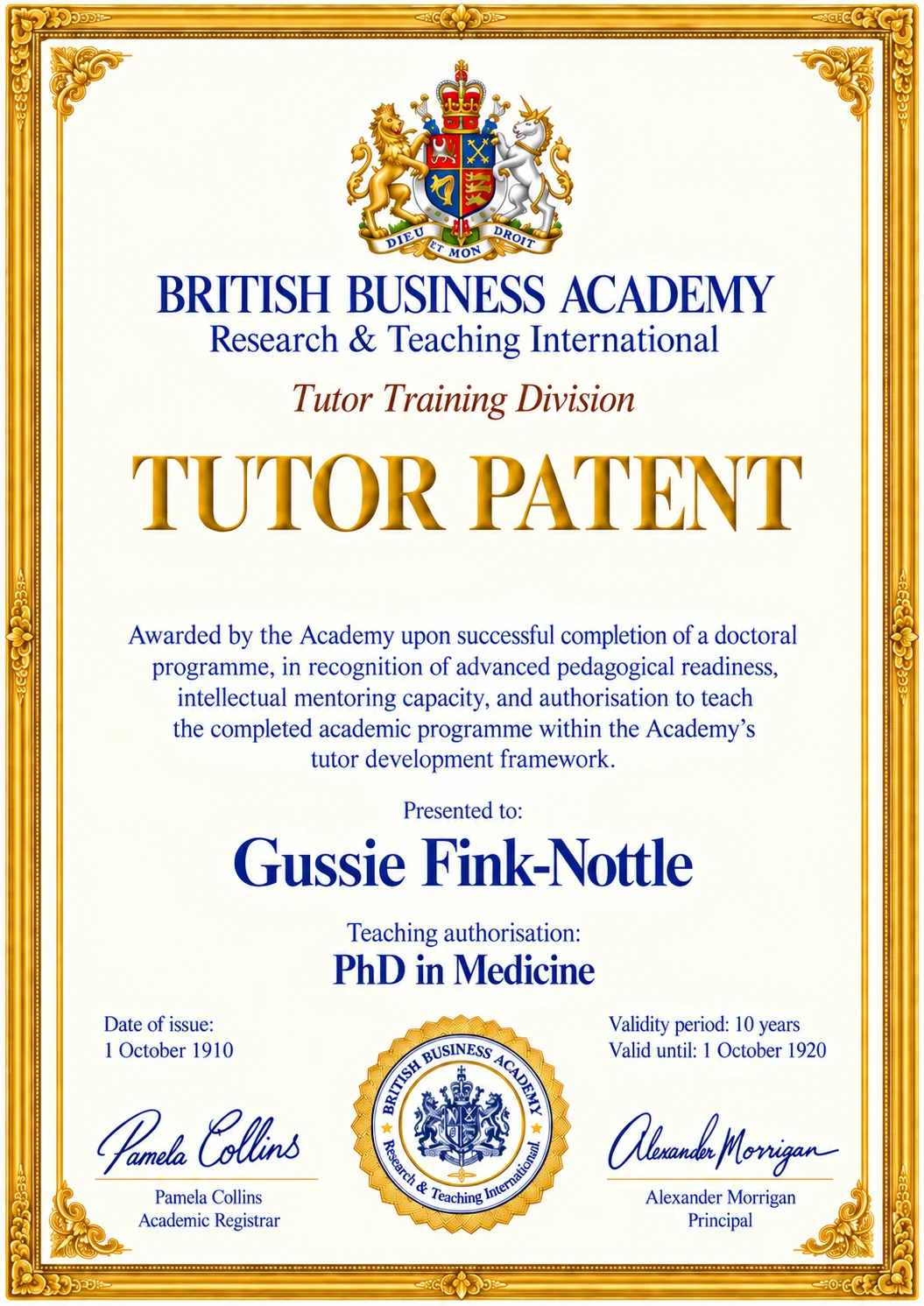
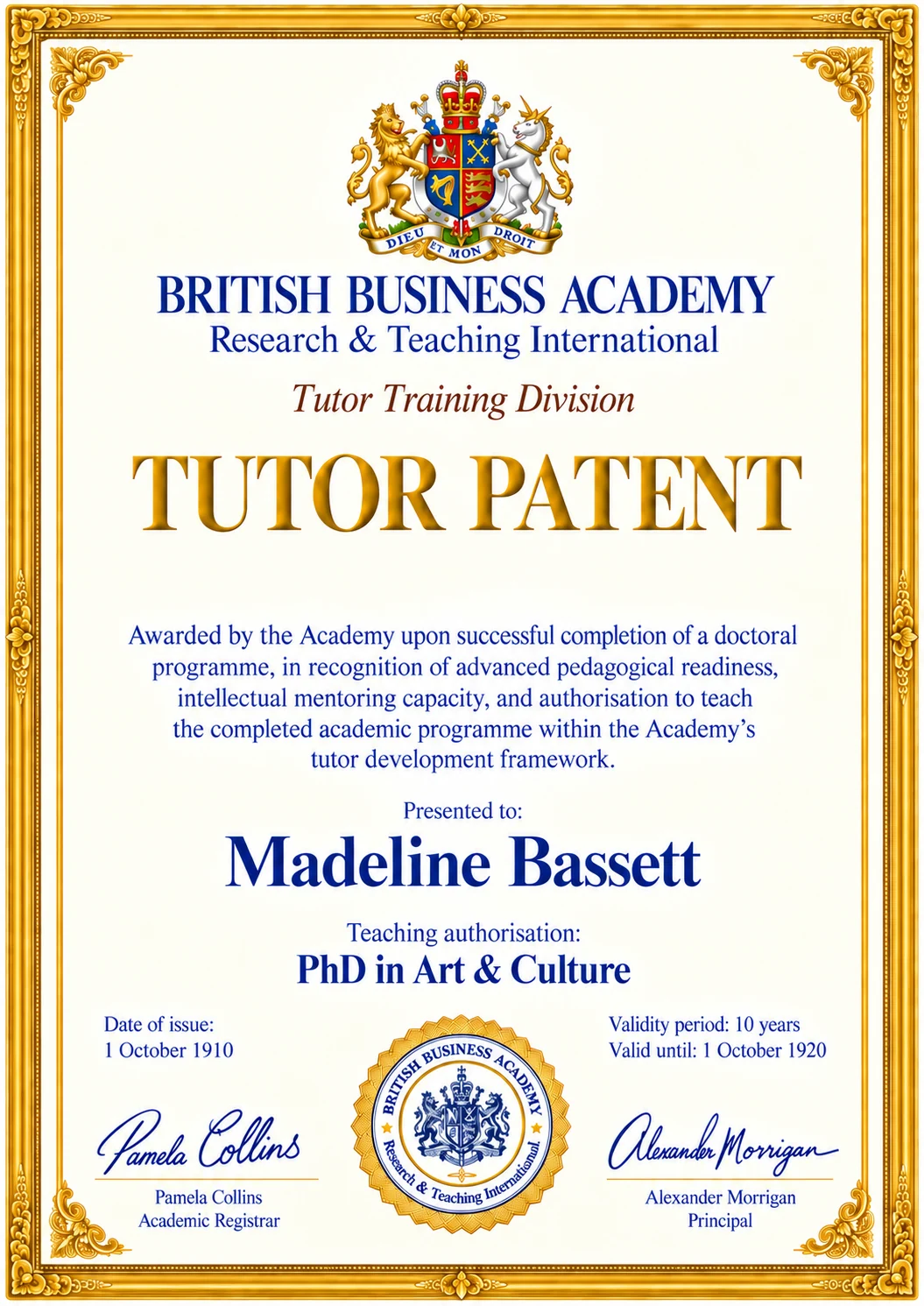
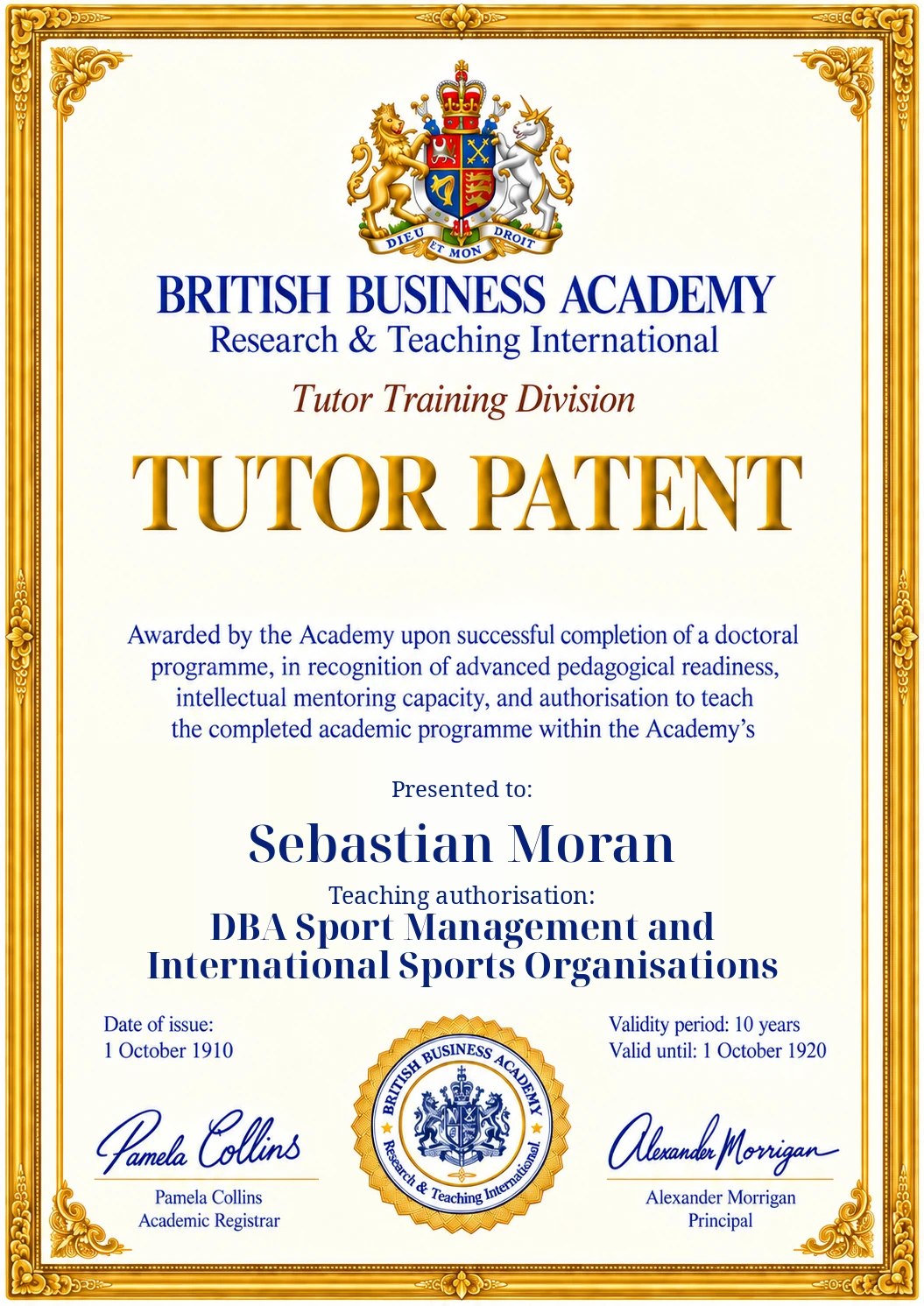
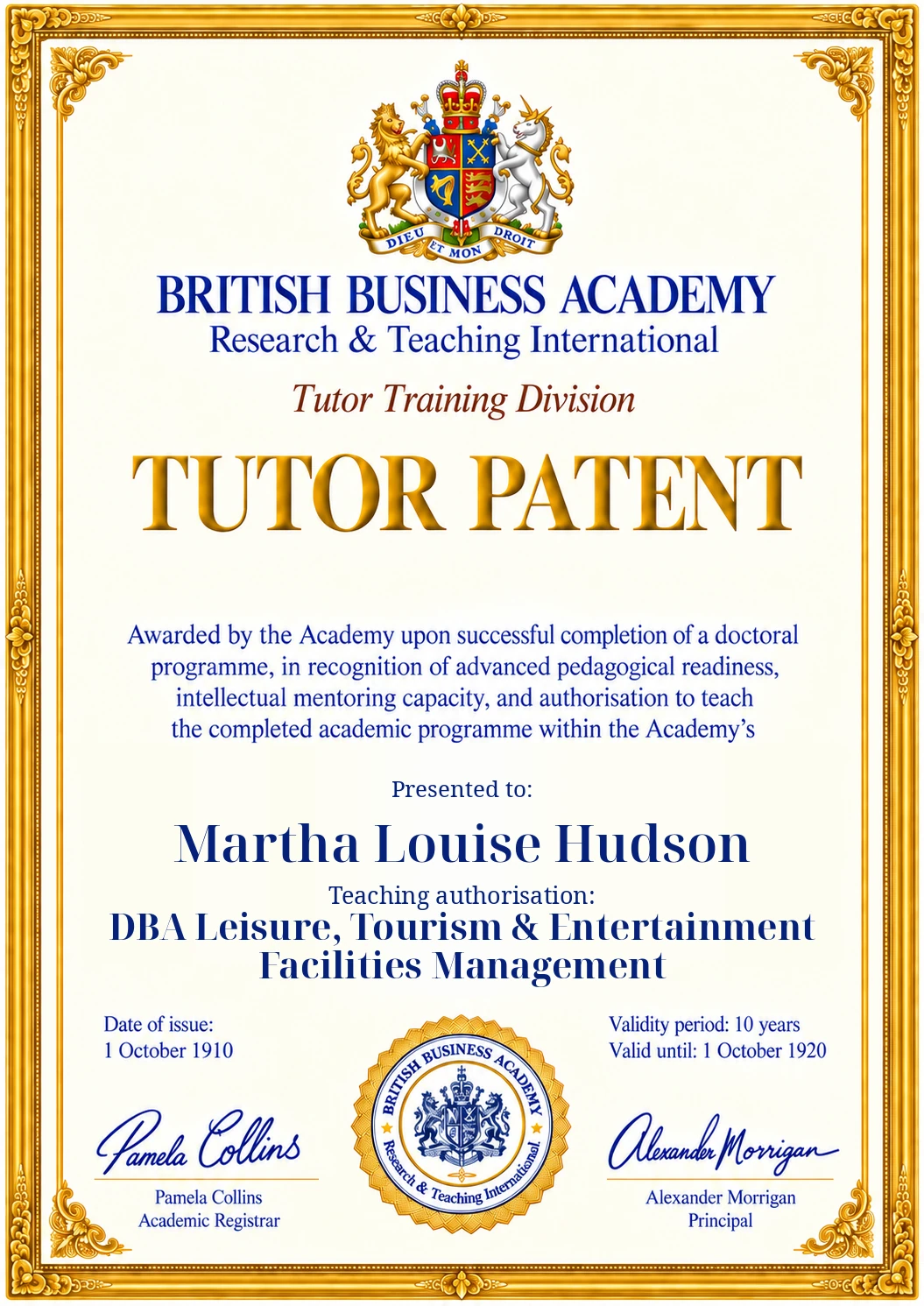
The six historical designs below are literary souvenirs featuring characters from P. G. Wodehouse, with fictional dates of 1910–1920. They illustrate the intended format rather than certificates issued to real graduates.


DBA Tutor Patents — programme-specific designs
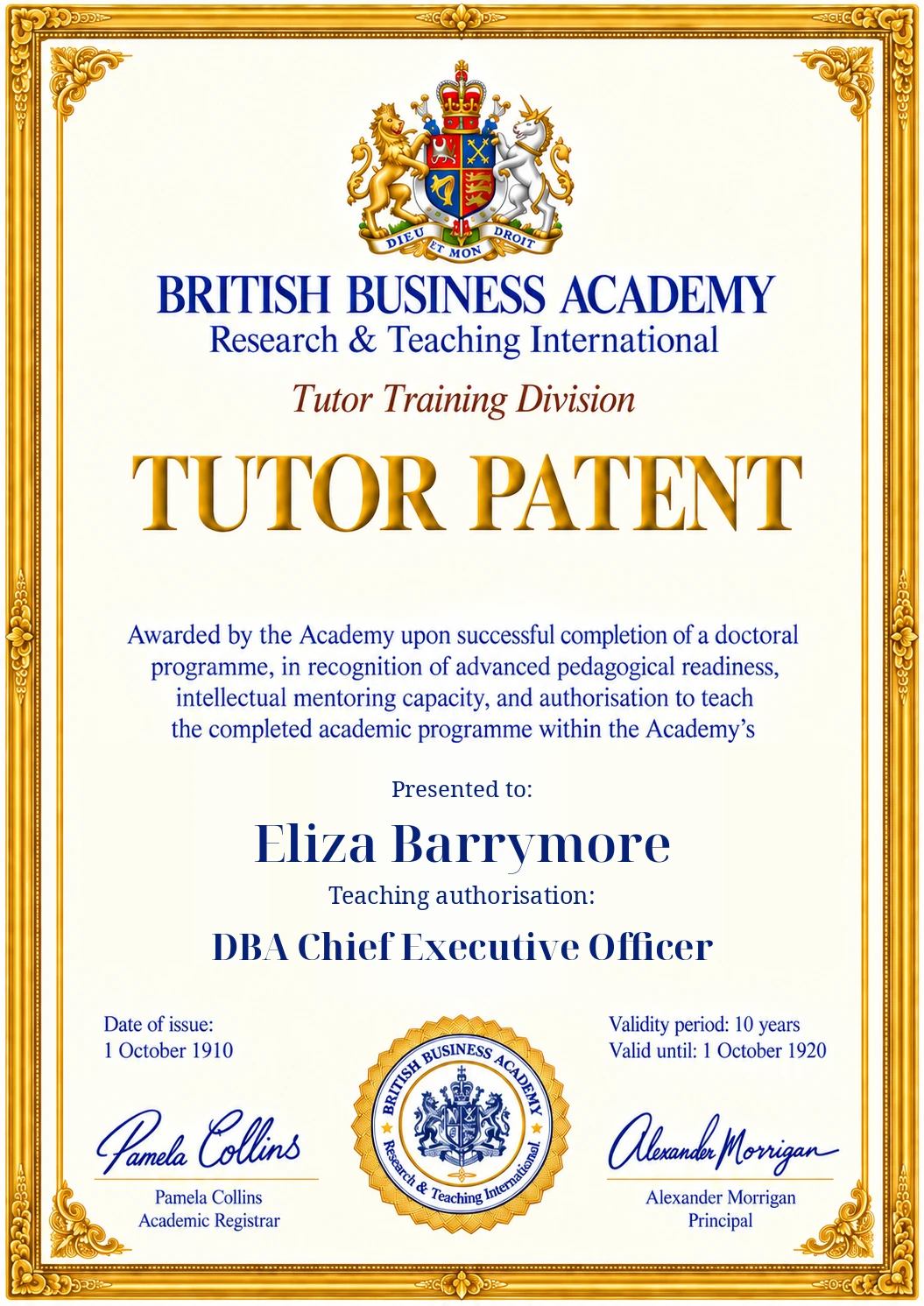
The following twelve historical souvenir designs correspond to the Academy’s DBA programmes. They feature named literary characters and fictional dates (1910–1920); the illustrations do not constitute actual academic or teaching awards.

The tutor of the future
As scientific disciplines converge and technologies change the way knowledge is developed, tutors will need to recognise emerging research questions and understand the relationships between culture, human values, technological capability and social transformation.
The future of science depends not only upon those who discover new knowledge, but also upon those who help others learn how to discover it.
Explore the Academy’s research collections.
Five curated English-language collections connect applied doctoral enquiry, scholarly analysis, research methods and interdisciplinary perspectives.
Open the Research Library →